Home › Asphalt Pathways, Sidewalks, and Trails
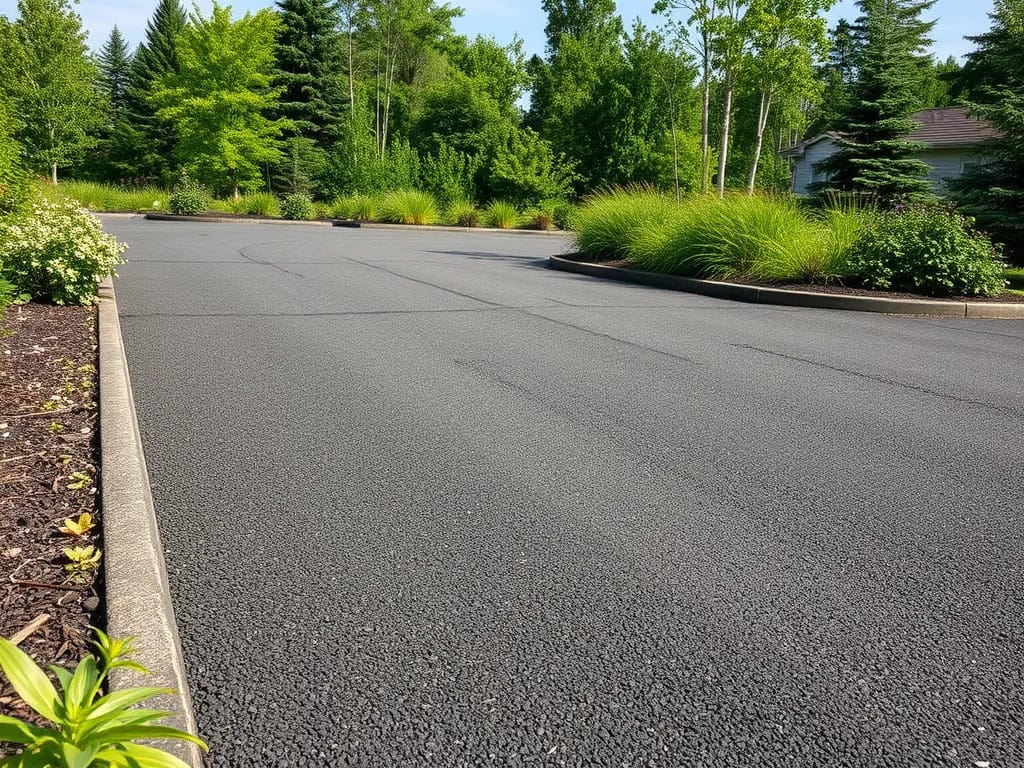
Connect your property with smooth asphalt pathway paving in Tulsa, OK. We build sidewalks, walking loops, and multi use trails that are safe, accessible, and easy to maintain.
Precision Asphalt Tulsa provides professional asphalt pathway paving throughout Tulsa, OK, Oklahoma and the surrounding area. Our licensed, insured crew delivers safe, clean, on-time work with a free estimate before anything begins. Call (918) 703-4204 or request your free quote.
Asphalt pathways, sidewalks, and trails built for Tulsa neighborhoods
Neighborhood paths, school sidewalks, and park trails in Tulsa have to handle hot summers, sudden storms, and steady foot and bike traffic. At Precision Asphalt Tulsa, we design and install asphalt pathways, sidewalks, and trails that fit how people in our city really use them, from morning joggers along the river to kids walking to school.
Instead of treating every pathway the same, we start by asking how the space is used. A residential sidewalk that sees strollers and wheelchairs needs different widths and slopes than a multi‑use trail that handles bicycles and service carts. We look at nearby driveways, drainage patterns in your yard or park, and how the path connects to streets or parking lots so you do not end up with puddles at entry points or trip hazards at transitions.
Our crews live and work here in Tulsa, so we understand where clay soils tend to move, which areas hold water after one of our heavy thunderstorms, and how the freeze and thaw cycles on the east side of town differ from open areas out near Broken Arrow. That local knowledge shapes how we build your asphalt pathways so they last longer and stay safer.
Planning and layout that match how people actually move
Good asphalt pathway paving starts with a layout that matches real foot traffic. We walk the site with you, look at existing desire paths where people already cut across the grass, and mark natural routes that feel comfortable and direct. This way, you end up with a sidewalk or trail people actually use, not one they walk around.
We mark utilities and any existing irrigation lines so the new path does not interfere with sprinkler coverage or shallow pipes. On school and church properties in Tulsa, we pay close attention to pickup and drop‑off areas so children are not forced to cross drive lanes unnecessarily. For HOA pathways and greenbelt trails, we consider how maintenance crews will access the area with mowers or carts.
Slope and cross‑slope are just as important as the route itself. We typically design a gentle cross‑slope, often around 2 percent, so water sheds off the side of the path instead of running down the middle. At driveway or street crossings we match existing elevations as closely as possible to avoid sharp lips that can catch stroller wheels or create snowplow damage in winter.
Base preparation and subgrade work for Tulsa soils
A good asphalt pathway begins under the surface. Tulsa soils can range from tight clay that holds water to softer loam that shifts when it gets saturated. Precision Asphalt Tulsa evaluates your subgrade and adjusts the base design so the walkway does not heave, crack, or collapse along the edges.
We start by stripping grass, topsoil, and organic material within the pathway footprint. The subgrade is then shaped to the correct elevation and compacted with plate tampers or rollers, depending on access. In areas with known soft spots or heavy foot traffic, such as bus stops or entrances to park shelters, we may over‑excavate and bring in additional aggregate for extra support.
Most residential sidewalks and community paths receive a crushed stone base, typically between 3 and 6 inches thick, depending on soil conditions and whether light vehicle access is expected. The stone is spread, graded for proper drainage, then compacted in layers. Along the sides we may build slight shoulders of compacted material to support the asphalt edges and reduce raveling where grass meets pavement.
For trails that run near creeks or in low‑lying Tulsa parkland, we often address moisture by slightly raising the path and using a more open graded base material that allows water to drain through instead of sitting under the pavement. Addressing these conditions during base prep is one of the keys to avoiding early settlement and alligator cracking along narrow paths.
Asphalt mixes, thickness, and finishes for walkable surfaces
Not all asphalt is the same, and pathways benefit from mixes chosen for comfort and durability under foot and bicycle traffic. Precision Asphalt Tulsa typically uses a finer aggregate surface mix on sidewalks and trails. This creates a smoother finish that is easier on shoes, stroller wheels, and mobility devices than the rougher mixes often used on parking lots.
The thickness of the asphalt layer is based on use. Light‑use residential walkways may be designed at a thinner depth, while school campuses, multi‑use trails, or maintenance access paths that occasionally see small utility vehicles or golf carts receive a thicker section. In higher stress areas, like entrances near parking lots or dumpster pads where service vehicles may occasionally drive, we reinforce the design so those sections do not rut or break apart.
Our crews place the asphalt while it is hot, then compact it using plate tampers and small ride‑on rollers sized for narrow paths. This helps achieve density without damaging nearby landscaping or fences. Edges are carefully shaped to create a compact, rounded shoulder so the asphalt does not crumble where it meets grass. Where needed, we apply edge restraints or concrete collars at connections to existing sidewalks or steps for a clean, long‑lasting joint.
Color and texture can be adjusted with sealcoats and striping. For example, school walkways may receive high‑contrast crosswalk markings or designated bike lanes, and park trails might use subtle striping to separate pedestrian and bike traffic without overwhelming the natural look.
Drainage, accessibility, and safety on Tulsa walkways and trails
Tulsa’s sudden downpours mean drainage is one of the most important parts of any asphalt pathway project. We design slopes so water flows off the surface and into adjacent turf or designated swales instead of collecting in low points where algae and ice can form. On longer greenbelt trails, we introduce gentle grade breaks and occasional culverts or drain crossings to move water under the path where needed.
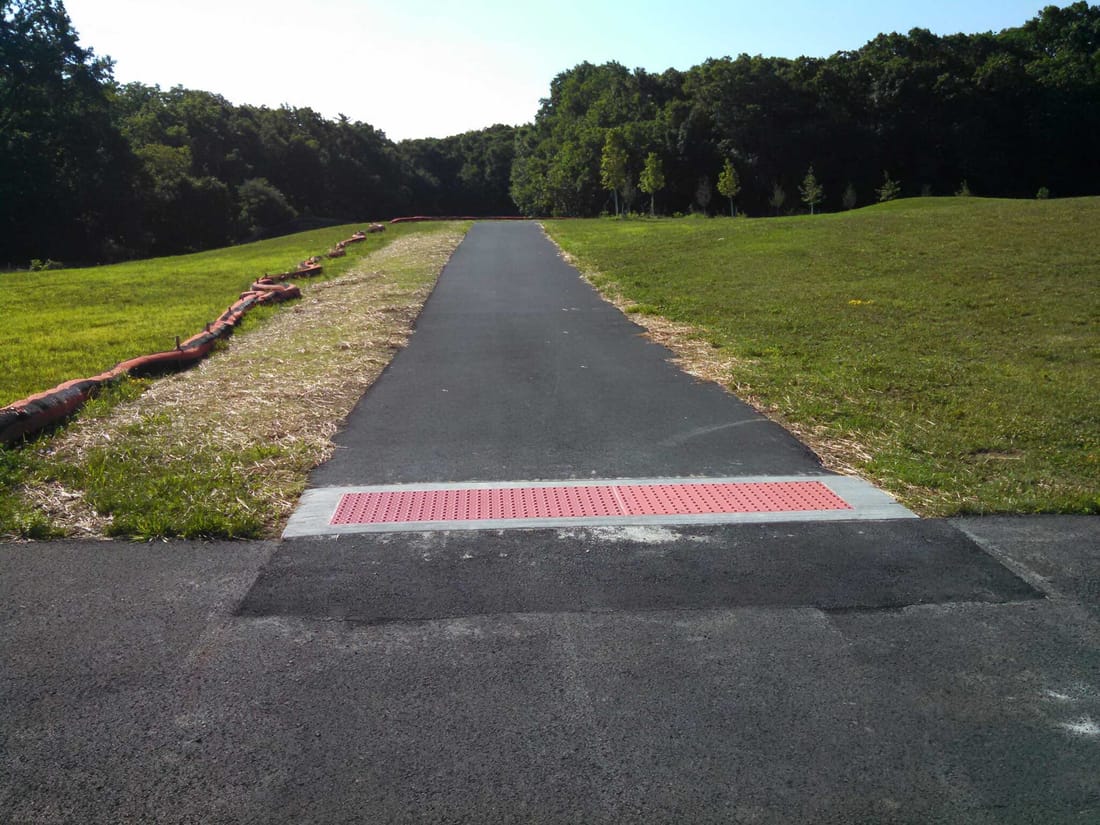
Accessibility is built into the design from the beginning. Precision Asphalt Tulsa follows ADA guidelines for slope, cross‑slope, and landings wherever public access is expected, such as at churches, schools, municipal paths, and business campuses. At curb ramps and street crossings, we coordinate with existing curb heights and can integrate concrete transitions or truncated domes where required.
Lighting and visibility are another part of safety. While we do not install electrical systems, we coordinate with your lighting contractor and lay out the path so pole bases, conduit, and junction boxes do not interfere with the walking surface. In shaded areas that tend to stay damp, we may recommend a slightly steeper cross‑slope or more frequent drainage outlets to reduce the time water sits on the surface.
Common problems we prevent and repair on Tulsa asphalt pathways
Poorly built pathways in Tulsa tend to show the same problems. Edges break off where there is no support, low spots hold water after every storm, and tree roots push up sections to create trip hazards. Precision Asphalt Tulsa addresses these issues through both new construction and repair work.
When building new paths near mature trees, we adjust alignment to protect major roots where possible, or we install root barrier systems to reduce future uplift. Where paths must cross under tree canopies, we plan for slightly thicker base and surfacing so the asphalt can better resist movement. We also avoid placing control joints directly over obvious root zones when transitions to concrete are required.
For existing sidewalks and trails with cracks or settlement, we evaluate whether localized repairs will hold or if a larger section needs reconstruction. Narrow cracks may be cleaned and filled with hot rubberized sealant to keep water out of the base. Depressions that hold water can sometimes be corrected with asphalt leveling courses, then overlain with a new surface layer. In areas with widespread base failure, we recommend removal, subgrade correction, and rebuilding so you are not paying repeatedly for short‑term fixes.
Our goal is to extend the life of your sidewalks and trails. We often suggest a maintenance schedule that includes periodic crack sealing and sealcoating, particularly on high‑use school and park networks. This schedule is tailored to Tulsa’s climate and typical wear, rather than a one‑size‑fits‑all calendar.
What affects cost and how Precision Asphalt Tulsa works with your budget
Pathway and sidewalk projects in Tulsa vary in cost based on length, width, thickness, base requirements, and access to the work area. A short walk from a driveway to a front door is very different from a half‑mile HOA trail that winds behind homes and crosses drainage ways. Precision Asphalt Tulsa walks the site with you and explains which elements are driving the numbers so you can make informed choices.
Key cost factors include how much existing material must be removed, whether new base rock is needed or the existing base can be reused, and how difficult it is to reach the site with equipment. Tight backyards, steep slopes, or areas behind fences may require smaller machinery and more hand work, which we factor into the estimate. For public and commercial properties, additional costs can come from ADA improvements, concrete transitions, and striping.
We help you prioritize. Sometimes, upgrading base thickness in high‑stress sections and using a standard design in lighter‑use areas gives the best balance of cost and longevity. In HOA and school projects, we can phase work in sections so paths remain usable while construction moves along.
Every proposal from Precision Asphalt Tulsa is written in plain language that explains the scope, from subgrade prep to final compaction. We outline the expected schedule, how we will protect nearby yards or landscaping, and what to expect during and after paving. Our crews clean up the site, haul away debris, and walk the finished path with you to answer questions about curing time, initial use, and long‑term maintenance.