Home › Commercial Asphalt Resurfacing & Overlays
Revive tired pavement with commercial asphalt resurfacing in Tulsa, OK. We repair base failures, mill high spots, and install overlays that renew parking lots and drive lanes without full reconstruction.
Precision Asphalt Tulsa provides professional commercial asphalt resurfacing throughout Tulsa, OK, Oklahoma and the surrounding area. Our licensed, insured crew delivers safe, clean, on-time work with a free estimate before anything begins. Call (918) 703-4204 or request your free quote.
Commercial Asphalt Resurfacing in Tulsa That Extends Pavement Life
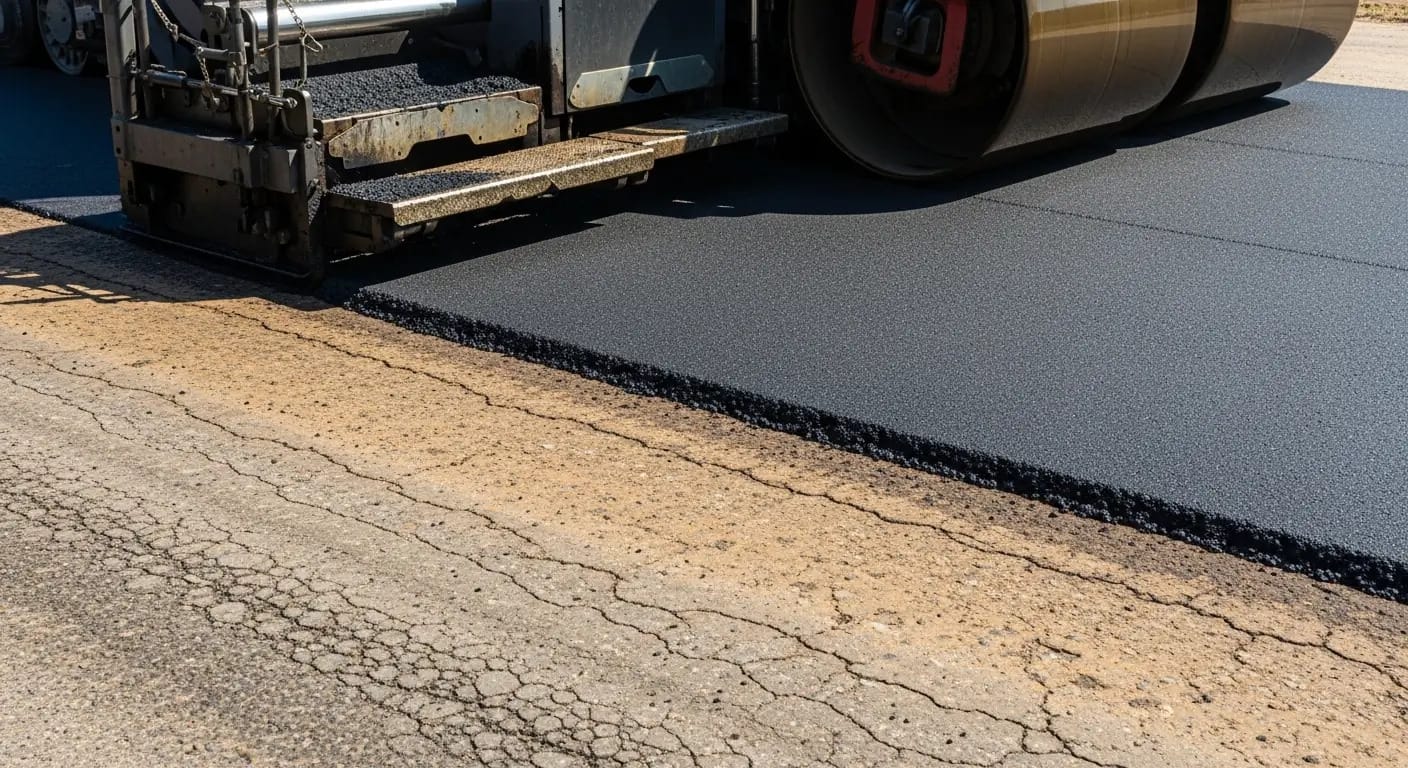
When your commercial parking lot or drive lanes start showing ruts, cracking, or drainage issues, full replacement is not always the smartest first step. Commercial asphalt resurfacing, also called overlays, lets Precision Asphalt Tulsa restore structural strength and appearance by installing a new asphalt layer over your existing pavement. For many Tulsa properties, this gives you 8 to 15 more years of service at a fraction of full reconstruction cost.
Resurfacing is ideal for shopping centers, office parks, industrial yards, churches, medical campuses, and multi family communities across Tulsa and the surrounding suburbs. Our team evaluates whether your existing base and subgrade are sound, then designs an overlay thickness and asphalt mix that fits how your property is actually used, from light customer parking to heavy truck traffic.
Because we work in Tulsa every day, we understand how our clay soils, freeze thaw cycles, and Oklahoma heat affect asphalt. That local knowledge shapes how we repair underlying failures, how thick we go with the new surface, and which mix design will stand up to both summer heat and winter moisture rather than simply looking good for the first year.
How Our Commercial Asphalt Resurfacing Process Works
A successful commercial overlay is all about prep work and drainage. Precision Asphalt Tulsa follows a tightly sequenced process so your new surface bonds and performs the way it should.
First, we perform a detailed site assessment. We walk the pavement, mark all structural issues, identify low spots where water stands after a rain, note traffic patterns and turning areas, and locate underground utilities and building entrances that affect phasing.
Second, we handle milling and edge preparation. In most commercial asphalt resurfacing projects, we use a milling machine to grind down the old surface at tie in points such as entrances, dumpster pads, ADA ramps, and around concrete curbs. This creates a smooth transition so your new overlay is flush with existing features instead of creating trip edges or steep lips.
Third, we perform full depth repairs where the base has failed. Areas with alligator cracking, potholes that return after patching, or severe rutting are cut out with a saw, excavated down to solid base, and rebuilt with compacted aggregate and hot mix asphalt. This prevents old failures from reflecting through the new overlay in a year or two.
Fourth, we clean and tack the surface. The pavement is swept and blown to remove dust and debris. Then we apply a tack coat, a sprayed asphalt emulsion, that creates a strong adhesive bond between the old surface and the new asphalt layer. Skipping or thinning this step is one of the biggest reasons overlays peel or slip, which is why we treat it as non negotiable.
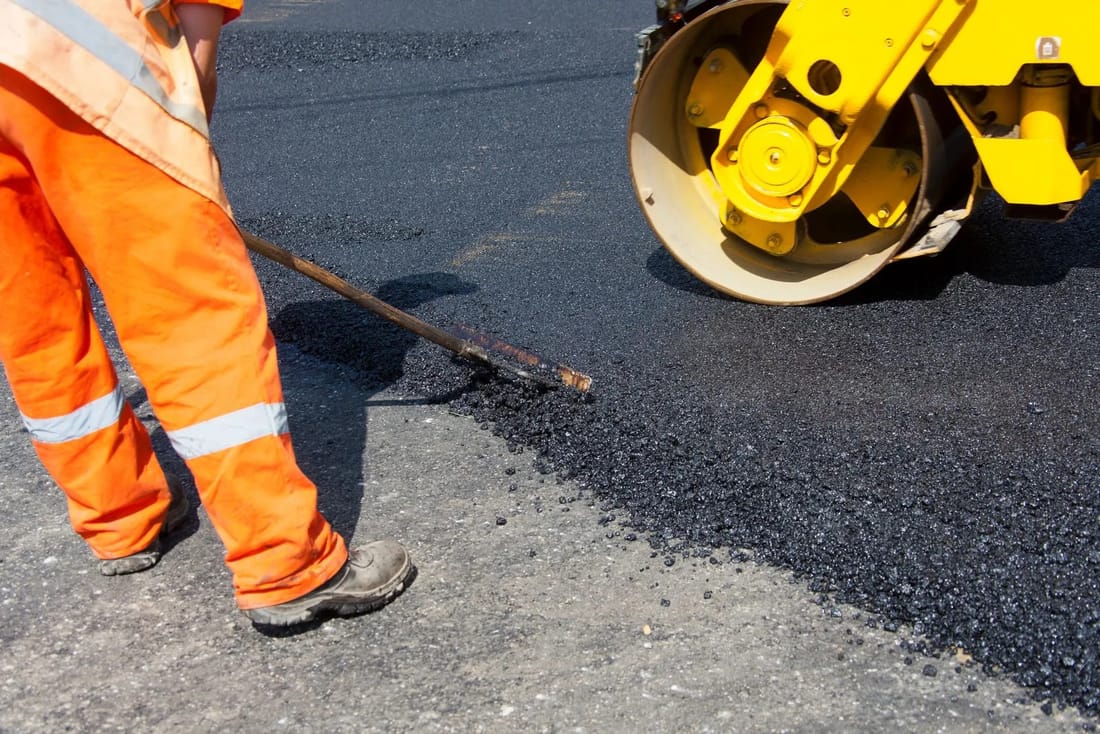
Finally, we place and compact the new asphalt overlay using commercial paving machines, not just hand tools. We control mat temperature, roller pattern, and joint locations, which directly affects smoothness and long term durability. Once cooled, we install striping and pavement markings so you can open back up efficiently.
Overlay Design Options: Thickness, Mixes, and Traffic Needs
Not every commercial asphalt resurfacing project in Tulsa should get the same overlay. Precision Asphalt Tulsa customizes designs based on load, budget, and existing conditions so your pavement matches what actually happens on site.
Overlay thickness is a major variable. Light duty parking areas with primarily passenger vehicles might receive a 1.5 to 2 inch overlay. Drive lanes with frequent delivery trucks, fire lanes, or drive thru routes often require 2 to 3 inches. Heavy duty loading docks or industrial yards may use multi lift overlays with a base course and a finer surface course.
Asphalt mix type matters as much as thickness. For high traffic commercial sites, we typically recommend a dense graded hot mix with a higher quality aggregate blend to resist rutting from wheel paths and tight turning movements. In areas with frequent oil drips, such as restaurant parking or convenience stores, we may adjust mix selection and recommend a follow up sealcoat schedule to protect the new overlay from petroleum degradation.
We also look at slope and drainage during design. On many Tulsa lots, the original builder did not provide enough cross slope, which is why water stands after storms. In those cases, we use the overlay to subtly reshape the surface, adding slope where we can by feathering asphalt thickness. This is a cost effective way to improve drainage without tearing out the entire structure.
If your property requires ADA compliance upgrades, we can integrate new grades, ramps, and striping layouts into the overlay project so that accessibility issues are corrected at the same time the surface is renewed.
What Drives the Cost of Commercial Asphalt Resurfacing
Property managers and owners want to know why two overlay quotes can be thousands of dollars apart. The total cost of commercial asphalt resurfacing is driven by more than just square footage, and understanding those drivers helps you compare bids fairly.
Existing condition is the biggest factor. A large, relatively sound lot with scattered surface cracking is less expensive to resurface than a smaller lot with widespread base failures that require many full depth repairs. Precision Asphalt Tulsa itemizes base repair quantities in our proposals so you can see what is being built beneath the overlay.
Overlay thickness and asphalt tonnage also affect cost. A 3 inch overlay uses roughly twice as much asphalt per square yard as a 1.5 inch overlay. For high traffic or truck areas, the thicker option is usually the only choice that makes long term sense, but we will often value engineer by varying thickness across the project instead of using a single number everywhere.
Access and phasing have real costs on commercial projects. Working around business hours, keeping drive lanes open, and splitting work into multiple phases so tenants can operate safely takes additional labor and traffic control. We plan phasing in detail upfront so the schedule and cost are clear.
Finally, site specifics around Tulsa influence pricing. Steep grades, tight courtyards, or limited truck access can require different equipment or hand work. If your lot has significant drainage problems or code driven improvements such as new ADA stalls, those components will also be included so the final result is both durable and compliant.
Handling Common Overlay Problems Before They Start
Many overlay failures come from trying to pave over issues that should have been corrected first. Precision Asphalt Tulsa focuses on diagnosing those problems so your commercial asphalt resurfacing does not just hide them for a season.
Reflective cracking from existing joints and cracks is a frequent concern. We approach this by routing and filling significant cracks before overlay, performing fabric or grid installations when appropriate, and cutting out areas where cracking indicates base failure instead of simple surface fatigue.
Drainage is another major issue, especially in Tulsa properties where original grading did not account for heavy storms. We identify birdbaths and flow paths, then use milling and strategic build up to correct ponding wherever possible. If water is trapped because of surrounding concrete or building elevations, we may recommend additional solutions such as trench drains or localized reconstruction.
High traffic intersections and stop bar areas tend to shove and rut over time. In these zones, we consider using a stiffer mix, increased thickness, or a separate base course layer to distribute loads better. For loading areas where forklifts and semi trailers access docks daily, we may reinforce with thicker sections or coordinate with concrete pads at stationary wheel locations.
Why Tulsa Businesses Choose Precision Asphalt Tulsa for Overlays
Commercial asphalt resurfacing projects are disruptive if not managed correctly. Our team focuses on planning, communication, and workmanship so your operations stay on track while we strengthen your pavement.
We schedule work in phases that make sense for your property, whether that means tackling outer parking bays first, working nights, or splitting the project over multiple days so key entrances remain open. Before we begin, you receive a simple phasing map you can share with tenants or employees, with clear dates and affected areas.
Our crews are used to working on active retail centers, medical facilities, and industrial sites around Tulsa, Broken Arrow, Owasso, and Bixby. We coordinate signage, barricades, and flaggers where needed, and we always plan delivery truck and emergency access in advance.
Because we are local, warranty support is straightforward. If you have a concern after the overlay is complete, you are not chasing a distant contractor. We inspect and address issues based on what we see regularly on Tulsa pavements, such as isolated thermal cracking after unusually hard freezes or scuffing where tight turning trucks operate.
What to Know Before You Resurface Your Commercial Pavement
Before you commit to commercial asphalt resurfacing, there are several decisions and timing considerations that will affect your result and long term cost.
First, make sure you receive a pavement evaluation that talks about base condition, drainage, and traffic loading, not only square footage and price. A low bid that ignores structural repairs usually leads to an overlay that fails prematurely.
Second, consider timing. In Tulsa, paving season typically runs from spring through late fall, but the best results come when temperatures are warm enough for proper compaction and curing. We help you schedule around your peak business periods, school calendars, or seasonal events so disruption is minimized.
Third, think about long term maintenance while you are planning the overlay. A reasonable plan might include a sealcoat within 2 to 3 years, regular crack sealing, and periodic restriping. Precision Asphalt Tulsa can outline a maintenance schedule and budget so you know what to expect after resurfacing.
Finally, review striping and layout before we pave. Resurfacing is a perfect time to adjust parking counts, reconfigure traffic flow, add or move ADA stalls, or improve loading zones. We can provide updated layouts that make better use of your space while complying with local codes and accessibility requirements.
If you are unsure whether your property is a candidate for commercial asphalt resurfacing or full reconstruction, we can provide a straightforward assessment and walk you through both options with photos, core results if needed, and clear cost comparisons.