Home › Industrial and Heavy-Duty Asphalt Paving
Handle heavy traffic with industrial asphalt paving in Tulsa, OK. We design and build thicker, reinforced asphalt sections for truck yards, loading docks, and warehouse access routes.
Precision Asphalt Tulsa provides professional industrial asphalt paving throughout Tulsa, OK, Oklahoma and the surrounding area. Our licensed, insured crew delivers safe, clean, on-time work with a free estimate before anything begins. Call (918) 703-4204 or request your free quote.
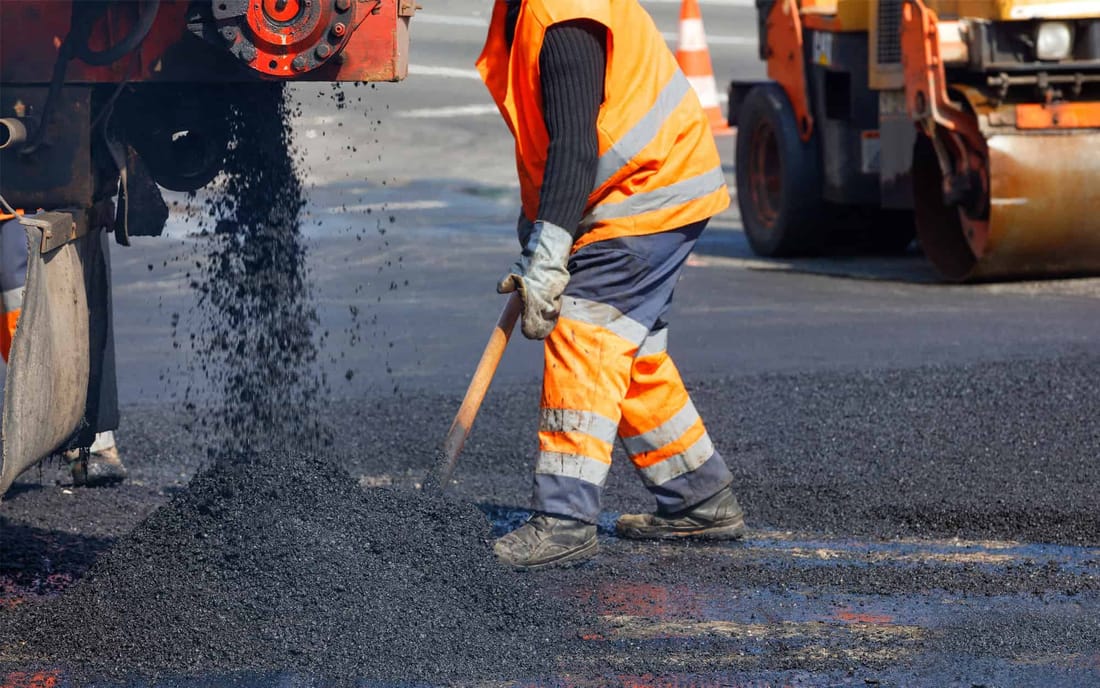
Industrial Asphalt Paving Built for Tulsa’s Toughest Sites
Industrial and heavy-duty asphalt paving is not the same as a basic parking lot or driveway. At Precision Asphalt Tulsa, we design pavements that can handle loaded semis, forklifts, container traffic, fuel deliveries, and constant turning movements without rutting or breaking apart.
In Tulsa, most industrial sites sit on mixed soils, from firm shale areas near east Tulsa to softer river-influenced soils closer to the Arkansas River and older rail corridors. Before we talk thickness or asphalt type, we look at your subgrade: we test, probe, and, when needed, proof-roll with a loaded truck to see where the ground deflects. This early step determines whether your new pavement will last 5 years or 20.
We focus on specific use patterns instead of generic “heavy-duty” labels. A distribution center with dock bays and tight turning areas needs extra reinforcement at dock approaches and trailer parking lanes. A manufacturing plant with steady forklift traffic may need different surface mixes to resist shearing and fuel spills. By separating “high stress” lanes and zones from light-duty employee parking, Precision Asphalt Tulsa can put your budget where it matters most.
How Industrial Asphalt Paving Is Actually Built
For heavy-duty pavement, the structure under the black surface is what keeps you in business. Precision Asphalt Tulsa typically follows a multi-layer approach:
1. Site evaluation and grading plan. We walk the site, look at drainage paths, building elevations, truck access, and where water already wants to flow. We design grades so water leaves the pavement quickly instead of ponding at loading docks or roll-up doors.
2. Subgrade preparation. We strip unsuitable material, then scarify, moisture-condition, and compact the native soil. In areas with soft subgrade common in parts of west and north Tulsa, we may undercut weak spots, add select fill, or use geogrid reinforcement to reduce future settlement.
3. Base stone installation. For industrial work we rarely recommend less than 6 inches of compacted crushed stone, and 8 to 12 inches is common for truck routes and dumpster pads. Stone is installed in lifts, each one compacted with heavy rollers and tested for density.
4. Asphalt layering. On heavy-duty sections we use multiple asphalt lifts. A typical truck lane might have a 2 to 3 inch surface course over a 2 to 3 inch binder course. High-impact zones like dumpster pads, fuel islands, and dock aprons may get an extra lift or a higher performance mix.
5. Compaction and joints. Industrial paving lives or dies by compaction. Our crews use steel drum and pneumatic rollers with enough passes to hit specified density. We treat joints, especially at concrete thresholds, with tack and careful rolling so they do not unravel under repetitive loads.
This process takes more planning than a simple overlay, but it is how we get pavements that hold up under Tulsa’s mix of heat, storms, and heavy trucks.
Material Options for Heavy-Duty Asphalt in Tulsa
Not all asphalt is the same. For industrial asphalt paving, Precision Asphalt Tulsa selects mixes that balance strength, flexibility, and resistance to fuel, oils, and high temperatures.
Surface courses typically use a tighter gradation to resist raveling under turning traffic. On truck courts and loading areas we may specify a slightly coarser surface with more stone to improve skid resistance and slow down rutting. Mix design also has to account for Tulsa’s hot summers, since softer binders can deform under slow moving, loaded trucks.
Binder courses are built with larger aggregate and stronger binder content. This layer carries most of the structural load. For heavy-duty pavements, we may adjust layer thickness based on truck counts and axle loads. A facility that sees a handful of deliveries each day can be built differently than a freight terminal that runs around the clock.
Some industrial clients request reinforced or composite sections (asphalt over concrete) for specific zones, such as compactor pads or container storage. We can design asphalt sections that tie cleanly into existing concrete without creating bumps or weak joints. Where chemical or fuel exposure is severe, we discuss sealers or surface treatments that slow down damage and make cleanup easier.
What Drives Cost on Industrial Asphalt Paving Projects
Two Tulsa sites of the same size can have very different paving costs. Precision Asphalt Tulsa is direct about what really affects the number on your proposal so you can make informed decisions.
The first driver is pavement structure. Thicker base stone and additional asphalt lifts cost more, but cutting them to “save” money is usually what leads to rutting and failure in a few years. We often show clients a side by side comparison of a minimum design and a heavier, more durable option, including projected life cycle costs.
The second major factor is site prep. If we discover weak soils, buried debris in older industrial corridors, or poor drainage that requires underdrains or regrading, that adds to the upfront cost but prevents ongoing patching and downtime later. On many older Tulsa warehouses, the most expensive part of the job is correcting decades of patchwork, not the new asphalt itself.
Access and phasing also matter. Active plants or distribution centers need to stay open. Night work, weekend schedules, and phased paving so trucks can keep moving will cost more than a wide open, empty site. We plan staging carefully to reduce disruption and keep your operations safe during the work.
Common Industrial Pavement Problems We Solve in Tulsa
Because we work across Tulsa’s industrial parks, refineries, and logistics corridors, we see the same issues repeat. Our industrial asphalt paving approach is designed to prevent these problems or correct them for the long term.
Rutting in truck lanes is usually a combination of inadequate structure and mix choice. We address this by thickening the asphalt and base in critical wheel paths, specifying mixes that hold shape under slow, heavy loads, and correcting any subgrade soft spots before paving.
Edge failures along loading areas and drive lanes often show up where heavy trucks drive right at the pavement edge. Our designs include proper edge support with wider base stone, thicker edge sections, or, where needed, concrete edge restraints or valley gutters.
Water related damage is common around dock doors, downspouts, and low spots. We correct grades, add strategic inlets, and, when possible, move water away from high traffic areas. For facilities that have expanded over time, we tie multiple generations of pavement together with proper milling, layered strengthening, and new striping so traffic flows are clear and loads spread more evenly.
By addressing the root causes instead of just patching holes, Precision Asphalt Tulsa helps facility managers get ahead of maintenance instead of constantly chasing it.
Planning Your Project With Precision Asphalt Tulsa
Successful industrial asphalt paving jobs start early, ideally before you finalize site layouts or equipment placement. Precision Asphalt Tulsa works with plant managers, property owners, and general contractors across Tulsa to match pavement design to real world use.
We begin with a walkthrough and a discussion about your traffic patterns, expansion plans, and maintenance history. On existing sites, we look at past repairs, settlement patterns, and any chronic problem areas. On new construction, we coordinate with your civil plans and recommend any adjustments to section thicknesses, drainage, or joint locations before crews mobilize.
Scheduling is planned around your operations calendar. For some Tulsa manufacturers we pave in off shifts and weekends to avoid interrupting production lines. For distribution centers, we often phase work by dock group or truck route, keeping access open while sections are rebuilt and cured.
After paving, we provide straightforward maintenance guidance focused on heavy-duty use: when to consider sealcoating based on your traffic type, what to do if you see early cracking, and how to handle fuel or oil spills to keep the surface from softening. The goal is simple, build an industrial pavement system that supports your business without constant attention or surprise failures.